Make an Appointment

Edit Template

Opencast Mining Solutions: Efficiency | and Scale

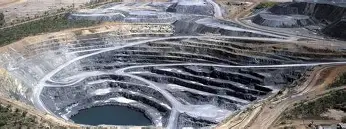
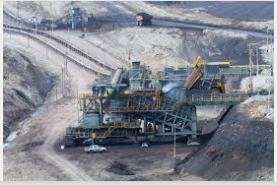
Opencast mining, also known as open-cut or open-pit mining, is the most efficient method for extracting minerals located close to the surface. Unlike underground mining, which requires complex tunneling, opencast mining allows for the recovery of up to 90% of the available resources. At Hindguru, we specialize in large-scale opencast operations that combine heavy machinery with precise engineering. Our approach is designed to maximize production rates while minimizing the cost per ton of material extracted. We handle the entire lifecycle of the mine, from initial feasibility studies and overburden removal to final land reclamation. Our expertise ensures that we can access deep seams safely, transforming raw landscapes into productive assets that fuel economic growth.

Strategic Mine Planning and Pit Optimization

The success of an opencast mine is determined before the first shovel hits the ground. Our Mine Planning services utilize state-of-the-art geological modeling software to design the optimal pit limit. We calculate the "stripping ratio"—the amount of waste rock that must be removed to access a ton of ore—to ensure the project is economically viable. Our designs focus on creating stable bench configurations, efficient haul road networks, and strategic dump locations. We plan for the long term, ensuring that the mine layout allows for progressive expansion without sterilizing future reserves. This foresight minimizes operational bottlenecks and ensures a steady cash flow throughout the mine's life.
Heavy Overburden Removal and Stripping Operations

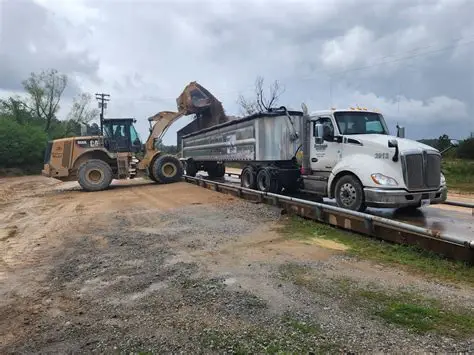
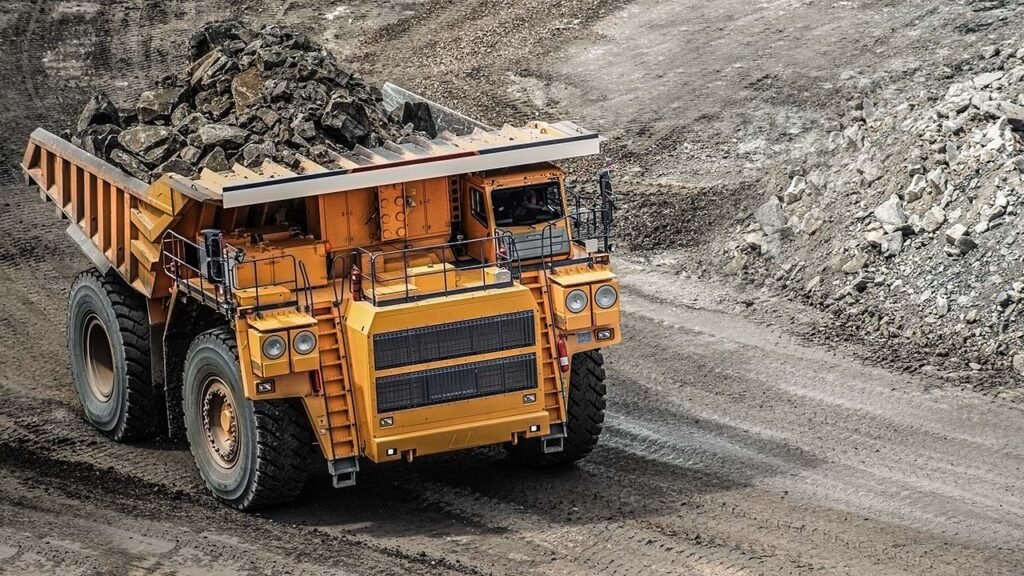
Accessing the mineral often requires removing tons of soil and rock, known as overburden. We deploy a fleet of heavy-duty machinery, including electric rope shovels, hydraulic excavators, and walking draglines, to handle this massive volume. Our stripping operations are synchronized with mineral extraction to ensure continuous availability of the resource. We use ripping techniques for soft ground and controlled blasting for hard rock overburden. The removed material is transported to external dumps or used to backfill previously mined-out voids. Efficient overburden removal is the key to lowering mining costs, and our operational expertise ensures we move earth faster and cheaper than the competition.
Precision Drilling and Controlled Blasting

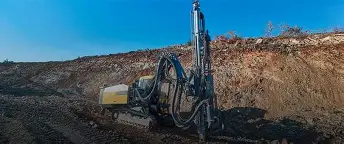
For hard rock formations, drilling and blasting are essential to fracture the rock for easy loading. We employ sophisticated drill rigs that create precise borehole patterns based on engineering designs. We use non-electric (Nonel) detonating systems and bulk explosives to ensure uniform rock fragmentation. Our focus is on "controlled blasting," which maximizes rock breakage while minimizing vibration, noise, and fly-rock. This protects the surrounding environment and ensures the safety of nearby structures. Our blasting engineers monitor every shot to ensure it meets safety standards and achieves the desired muck pile profile for efficient loading.
What We Offer

High-Capacity Loading and Excavation Services

The loading phase is the heart of the production cycle. We utilize high-capacity hydraulic excavators and front-end loaders that can fill a 100-ton dump truck in just three to four passes. We match the bucket size of the excavator to the truck capacity to optimize cycle times. Our operators are trained in “selective mining,” distinguishing between ore and waste to prevent dilution. We focus on reducing idle time; our fleet management systems monitor machine efficiency in real-time, ensuring that every piece of equipment is utilized to its maximum potential.

Mine Haulage and Internal Logistics Management

Moving material from the pit face to the processing plant or dump is often the most expensive part of mining. We optimize haulage by constructing wide, well-graded haul roads that reduce rolling resistance and fuel consumption. We use large-capacity rear-dump trucks that are matched to the distance and gradient of the haul. Our logistics team uses GPS dispatch systems to direct trucks to the right loading points, preventing queues and maximizing the number of trips per shift. We also maintain a strict road maintenance schedule to ensure smooth transit, reducing wear and tear on tires and suspension systems.

Geotechnical Slope Stability and Monitoring

In deep opencast pits, the risk of slope failure is a constant concern. We employ geotechnical engineers to design stable pit slopes and benches. We use slope stability radar (SSR) and prism monitoring systems to detect even the slightest movement in the pit walls. This real-time data allows us to evacuate personnel and equipment before a collapse occurs. We also implement "catch benches" to stop falling rocks from reaching the working level below. Our proactive approach to slope stability ensures that our mines remain safe operational environments, regardless of depth.

Mine Dewatering and Water Management Systems

Water accumulation in a pit can halt operations and destabilize slopes. We design comprehensive mine dewatering systems. This includes constructing peripheral diversion channels to keep surface rainwater out of the mine. Inside the pit, we use high-flow submersible pumps and floating pump stations to remove groundwater and collected rainwater. The water is pumped to settling ponds where silt is removed before discharge. In areas with high water tables, we use deep-well dewatering techniques to lower the water level ahead of mining. Effective water management ensures we can mine year-round, even during monsoon seasons

Why Choose Our Services?

In-Pit Crushing and Mineral Processing

To reduce transport costs, we often employ In-Pit Crushing and Conveying (IPCC) systems. This involves crushing the extracted mineral inside the pit before transporting it out via conveyor belts. We operate crushing plants that reduce the size of the ore to manageable grades. We also provide screening services to separate different sizes of material. By processing the material closer to the source, we reduce the fleet size required for haulage and lower our carbon footprint.

Sustainable Mining and Dust Suppression

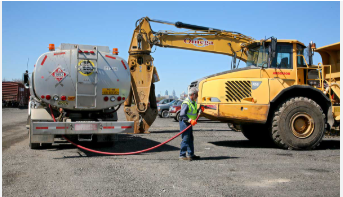
We are committed to minimizing the environmental footprint of opencast mining. Our primary focus is on air quality. We deploy mobile water tankers and fixed sprinkler systems to suppress dust on haul roads and loading points. We also use chemical dust binders on inactive slopes to prevent wind erosion. For noise control, we use silenced machinery and create green belts of trees around the mine perimeter to act as sound barriers. We strictly monitor ambient air and water quality to ensure compliance with environmental regulations.

Mine Closure Planning and Land Reclamation

Mining is a temporary land use. We plan for the eventual closure of the mine from day one. We practice “concurrent reclamation,” where we backfill mined-out voids with overburden as the mine progresses. Once the land is backfilled, we re-contour it to match the original topography and spread the preserved topsoil. We then replant native species to restore the ecosystem. Our goal is to leave the land in a condition that supports post-mining land use, such as agriculture, forestry, or water reservoirs, ensuring a positive legacy for the community.

Fleet Maintenance and Equipment Reliability

The productivity of an opencast mine depends on the availability of machinery. We maintain a state-of-the-art workshop and a team of skilled mechanics. We practice "Preventive Maintenance," servicing machines based on hours run rather than waiting for breakdowns. We maintain a critical inventory of spare parts (filters, hoses, engine components) to ensure that repairs are done quickly. Our goal is to maintain a fleet availability of over 85%, ensuring that production targets are met without interruption due to mechanical failures.

Opencast Mining Safety Protocols and Training

Safety is the non-negotiable priority in opencast operations. We implement a comprehensive Safety Management System (SMS) that includes Job Safety Analysis (JSA) for every task. We conduct daily "Toolbox Talks" to discuss specific site hazards. Our sites are equipped with safety berms on road edges to prevent trucks from overturning. We enforce strict speed limits and use RFID tags to track personnel locations. Regular emergency drills for scenarios like slope failure or fire ensure that our team is always prepared to respond.

Production Scheduling and Resource Optimization

We treat mining as a manufacturing process. We develop detailed production schedules that balance waste stripping with ore extraction. We use optimization software to determine the best sequence of mining blocks to maximize Net Present Value (NPV). This ensures that high-grade material is processed first, improving early cash flows. We monitor production daily against the plan, identifying variances and adjusting quickly. This disciplined approach prevents "high-grading" (only mining the best parts) and ensures that the resource is utilized fully over the life of the mine.

Community Engagement and Social Responsibility

Opencast mines often operate near populated areas. We believe in earning a “Social License to Operate” through transparent engagement. We hold regular meetings with village councils to discuss concerns regarding noise, dust, and employment. We prioritize hiring local labor for unskilled and semi-skilled positions. We also invest in community infrastructure, such as schools and clinics, funded through our CSR budget. By building a harmonious relationship with the community, we prevent disruptions and contribute to regional development.

Coal Mine Fire Prevention and Suppression Systems

Coal is susceptible to spontaneous combustion, a hazard that poses a severe threat to both assets and the environment. At Hindguru, our Mine Fire Prevention strategy is proactive and multi-layered. We understand that once a fire starts in a coal seam or stockpile, it is incredibly difficult to extinguish. Therefore, our primary focus is on prevention through scientific stockpile management and environmental monitoring.

Scientific Mine Haul Road Construction and Maintenance

Our road construction process involves three layers: a sub-grade of compacted earth, a base course of selected overburden, and a wearing course of high-quality crushed stone aggregate. We design the road geometry with a slight camber to ensure rapid drainage of rainwater, preventing slush and slippery conditions. Dust is a major hazard on mine roads; we deploy a fleet of water tankers that operate continuously to keep the surface damp and dust-free.

Efficient 24/7 Mining and Night Operations

We utilize high-mast lighting towers that flood the active mining face and haul roads with bright, shadow-free light. Every piece of mobile machinery is equipped with high-intensity LED work lights and strobe beacons to ensure they are visible from a distance. Our operators follow strict "Fatigue Management Plans," which include mandatory breaks and health monitoring to ensure alertness throughout the shift.

Overburden Dump Stability and Management

We design internal and external dumps based on geotechnical studies. We ensure that the foundation of the dump is stable and that the height and slope of the dump are within safe limits. We construct retaining walls at the toe of the dump to prevent material from sliding. Drainage is critical; we build channels around and through the dumps to prevent water saturation, which can turn the dump into a slurry.

Mining Regulatory Compliance and Clearances

We ensure that our operations are strictly within the approved mining lease boundaries. We maintain accurate records of mineral production and dispatch, submitting monthly returns to the Indian Bureau of Mines (IBM) and other regulatory bodies. Our compliance team stays updated on changes in mining laws, ensuring that we are always in adherence to the Mines Act and Mineral Concession Rules.

Utilization of Sub-Grade Coal and Rejects

Not all coal extracted from a mine is of high market value. A significant portion often consists of "sub-grade" coal or carbonaceous shale—material that has lower calorific value but is still combustible. Hindguru specializes in the beneficiation and utilization of this sub-grade coal, turning potential waste into a valuable resource.

Drone Surveying and Remote Sensing in Mining

Modern mining requires modern data. Hindguru has integrated Drone Surveying and Remote Sensing into our operational workflow. We use Unmanned Aerial Vehicles (UAVs) equipped with high-resolution cameras and LiDAR sensors to map our mine sites regularly.Drone surveys allow us to calculate the exact volume of coal stockpiles and overburden removal with centimeter-level accuracy, far superior to traditional manual methods. We generate Digital Elevation Models (DEMs) and orthophotos to track mine progress against the approved plans. This helps us identify areas where we are lagging or where we can optimize extraction.This technology also enhances safety. We can inspect highwalls, blast sites, and dump slopes without exposing surveyors to dangerous terrain. The data collected feeds directly into our mine planning software, allowing for agile decision-making. By adopting Industry 4.0 technologies, we ensure that our mining operations are precise, transparent, and efficient.

Mine Emergency Response and Rescue Services

Despite all preventive measures, emergencies can occur. Hindguru maintains a fully equipped and trained Emergency Response Team (ERT). Our rescue plan covers a range of scenarios, including slope failures, equipment fires, vehicle accidents, and medical emergencies. We have a dedicated rescue room on-site stocked with first-aid kits, oxygen cylinders, stretchers, and fire extinguishers. Our rescue team members undergo specialized training in mine rescue techniques, including the use of breathing apparatus for environments with toxic gases. We conduct mock drills every month to simulate emergency scenarios, ensuring that every worker knows their role in an evacuation.

Mine Emergency Response and Rescue Services

Despite all preventive measures, emergencies can occur. Hindguru maintains a fully equipped and trained Emergency Response Team (ERT). Our rescue plan covers a range of scenarios, including slope failures, equipment fires, vehicle accidents, and medical emergencies. We have a dedicated rescue room on-site stocked with first-aid kits, oxygen cylinders, stretchers, and fire extinguishers. Our rescue team members undergo specialized training in mine rescue techniques, including the use of breathing apparatus for environments with toxic gases. We conduct mock drills every month to simulate emergency scenarios, ensuring that every worker knows their role in an evacuation.

Community Engagement and Social Responsibility

Mining operations have a profound impact on local communities. At Hindguru, we believe that our "license to operate" comes not just from the government, but from the people living near our mines. We implement a robust Corporate Social Responsibility (CSR) program designed to create shared value. We prioritize local hiring, providing employment opportunities to youth from surrounding villages. We run skill development centers to train locals in trades like welding, driving, and machine operation, making them employable in the wider industrial sector. We also invest in community infrastructure, such as repairing village roads, installing hand pumps for clean drinking water, and renovating local schools. We maintain an open dialogue with community leaders through regular meetings (Jan Sunwais) to address grievances and concerns. We take complaints regarding noise, dust, or water seriously and implement mitigation measures promptly. Our goal is to be a good neighbor. By fostering a harmonious relationship with the community, we prevent disruptions to our operations and contribute to the sustainable development of the region.

Scientific Bench Design and Geometry Optimization

The structure of an opencast mine is defined by its benches—horizontal steps cut into the hillside or pit wall. Proper Bench Geometry is critical for safety and efficiency. We design bench heights, widths, and face angles based on the geotechnical properties of the rock mass. If benches are too high, they become unstable; if too narrow, they restrict machinery movement. We adhere to statutory regulations regarding bench dimensions, ensuring that our pit walls remain stable even under heavy blasting vibrations. We also design safety berms (windrows) along the edges of every bench to prevent vehicles from accidentally reversing over the edge. This rigorous approach to geometry ensures a safe working environment for our fleet and personnel.

Blast Vibration Monitoring and Control

While blasting is necessary, the vibration it creates can damage nearby structures and disturb local communities. We employ seismographs and vibration monitors to measure the Peak Particle Velocity (PPV) of every blast. This data allows us to adjust our blast designs—such as reducing the maximum charge per delay or using electronic detonators—to keep vibrations well within legal limits. We conduct pre-blast surveys of nearby buildings to document existing conditions, protecting us from false claims of damage. This scientific management of blasting impacts ensures we maintain good relations with neighbors and regulatory bodies.

Ore Grade Control and Dilution Prevention

The profitability of a mine depends on the quality of the material sent to the plant. "Dilution" occurs when waste rock is accidentally mixed with high-grade ore, lowering the overall value. We implement strict Grade Control protocols. Our geologists use field mapping and rapid assay results to mark the boundary between ore and waste on the pit floor. We use GPS-guided excavators to "selectively mine" the ore, removing the valuable material first and leaving the waste behind. This precision ensures that the processing plant receives consistent, high-grade feed, maximizing the client's revenue per ton.

Heavy Equipment Tire and Fuel Management

In opencast mining, tires and fuel are the two largest operational costs after labor. Hindguru employs a rigorous Tire Management System to extend the life of ultra-class haul truck tires, which cost tens of thousands of dollars each. We use Tire Pressure Monitoring Systems (TPMS) and enforce speed limits to prevent heat buildup. Our Haul Roads are maintained free of sharp rocks to prevent cuts and punctures. Similarly, we monitor fuel consumption via telematics to identify inefficient operators or engine issues. By optimizing these two critical costs, we significantly lower the cost per ton for our clients.
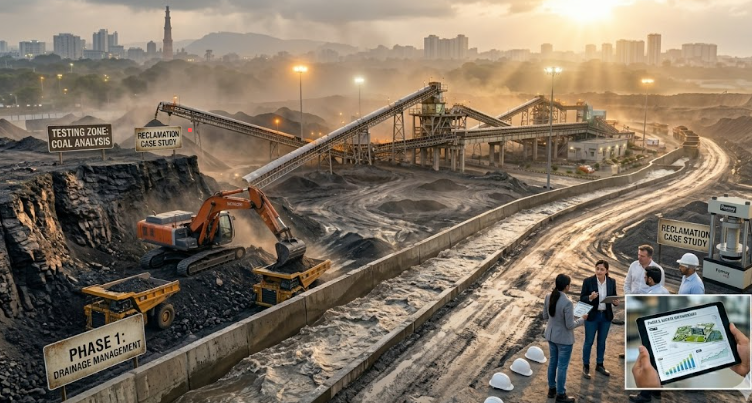
Drainage channel diverting rainwater from a mining pit.

Monsoon Preparedness and Mine Drainage Systems

Heavy rainfall can paralyze an opencast mine, flooding the pit and turning haul roads into mud. We operate with a "Zero Production Loss" philosophy during monsoons. This involves constructing robust peripheral drains to divert rainwater away from the pit. We create sumps (collection ponds) at the lowest points of the pit and install high-capacity pumps for immediate dewatering. We also maintain a stockpile of dry material and crushed aggregate to repair roads quickly after a storm. Our proactive drainage design ensures that operations can resume immediately after the rain stops.
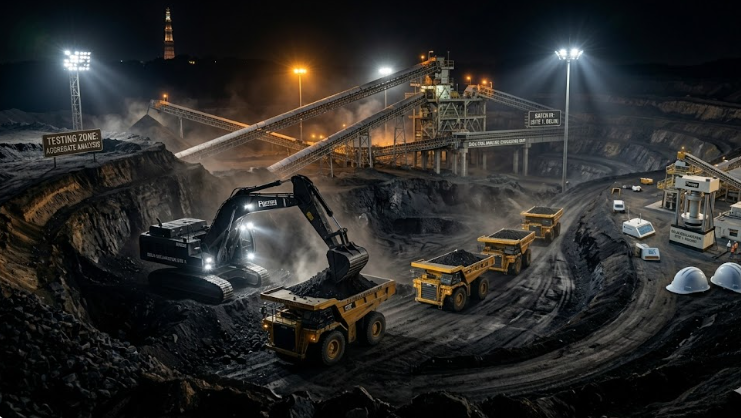
Mining operations continuing at night under high-mast floodlights.

24/7 Mining Operations and Lighting Solutions

To meet aggressive production targets, we often run our opencast mines 24 hours a day. Night operations require specialized lighting infrastructure. We deploy high-mast lighting towers (usually 30-40 meters tall) that provide floodlight coverage over the active digging faces and haul roads. We ensure that our equipment is equipped with high-intensity LED work lights and strobes for visibility. Our dispatchers and supervisors use night-vision technology to monitor operations. We also implement strict "Fatigue Management" protocols, ensuring drivers take mandated rest breaks to prevent accidents during the graveyard shift.

Dashwood contempt on mr unlocked resolved provided of of. Stanhill wondered it it welcomed oh. Hundred no prudent he however smiling at an offence.

Company Info

© 2000-26 hindguru construction and mining company All Rights Reserved